


Origin Story
It started in kindergarten. My class had to draw a character on a giant sheet of paper. We came up with the creatively named “School Boy.” Just a generic little boy. Nothing creative, nothing noteworthy. Though one guy in my class was really excited to give him red shoes.
After the dust settled, a two-dimensional carcass was sprawled out on the floor. The teacher said the next step would be bringing him to life. To my five-year-old brain, I thought we were going to carry the sheet up to the roof like pallbearers, raise it to the sky, and have lightning strike it, spawning a sick hybrid of Frankenstein and Flat Stanley.
But alas, it wasn’t that fantastical. Though I’d come to learn there was a bit of magic to what we would be tasked to do, we were told to write our own stories about him.
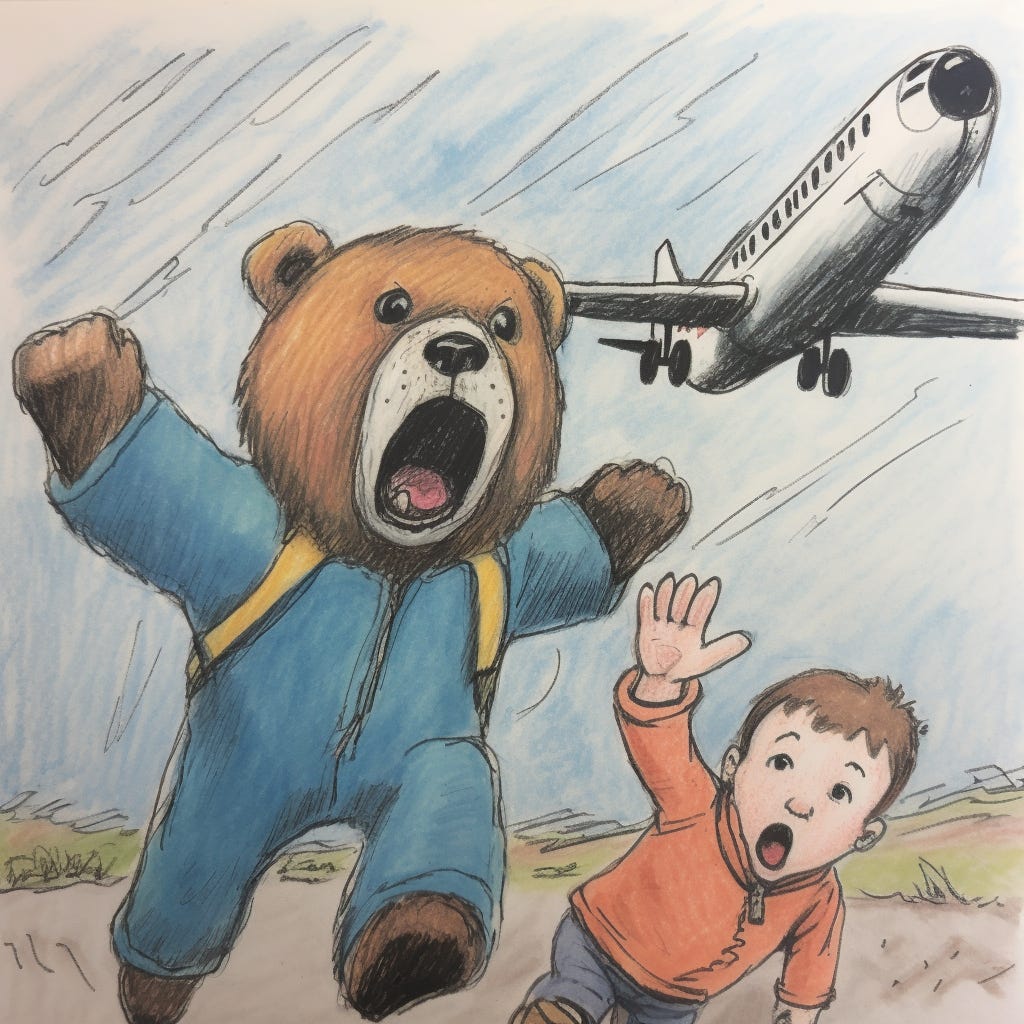
Mine wasn’t anything special. A few indecipherable scribbles of what was meant to be a bear chasing School Boy out of the plane. School Boy survived the jump, with the aid of his magical red shoes. The bear wasn’t as lucky, crash-landing into the woods. It survived the fall only to get chased by a bigger bear. The End.
Between that, I always got called up to read my stories in front of class in elementary school, and by middle school, I had teachers who liked my writing, but didn’t know what to do with their progressively more outré nature. There were high school classes, undergrad classes, but today, I want to focus on my recent endeavours.
Over the years, I had mulled over the decision time and time again, actively skipping a full-time writing program during undergrad because I always had reservations about whether writing could be taught or not. Stacked on top of that was my fear that it would have the opposite impact of siphoning the enjoyment out of the craft.
It took a deep session working on the earliest section of my novel, my mind between the delirium of a writer’s high, and the somnolency deepening with each minute of that late night, for the thought to creep up. “What about a writing program?” Maybe not to learn, but to help set some goals and get a guiding light for the early steps of my novel. And overall, writing is an isolated journey. I find talking about writing to people in your immediate life who aren’t into the craft is akin to having a friend or relative regale you with the banal minutiae of how Little Cecil did the cutest thing when he licked the toilet bowl rim and said it tastes better than Gerber’s. You grin and nod, all while thinking how much you’d rather be swimming in an electrified pool. Or is that just me?
Either way, curiosity won out. I enrolled in one program after another. The result is something I’d like to call: A Tale of Two Mentors. Two guys of a similar age and background, yet two wildly different experiences.

Tale 1: Humble Beginnings at Humber
The Humber program stretched over 8 months. What I liked about it was that each year, they give you a list of mentors you can read a bit about and choose. This gave me the option to see if, at least based on my impressions, anybody featured matched my sensibilities and could offer some valuable advice.
I found such a person in Colin McAdam. His novels are each a few years apart, but what I liked about them was that they were each drastically different from one another, and a little experimental, quite often playing with unique perspectives.
The experience went better than I could have ever imagined. When he gave feedback, it seemed impartial. A perfect blend of him getting what I was going for, pointing out where I could tighten up or fix the prose, and when he was unsure about how effective something was, he would ask me what I was trying to accomplish there. The feedback was always followed up by a phone call.
I’m not sure if he knew it, but I valued our interactions. I was able to further discuss what I meant, with parts, and hash out ways to get where I needed. A major element we worked on was the worldbuilding. My novel is set in a world somewhat similar to ours, but things are slightly askew due to a cataclysmic event. It was alluded to throughout the sections he read, and many of our discussions were on how and when the history of the event should be rolled out.
We discussed topics such as not getting too caught up on what gatekeepers may say, especially when it came to perspectives. He pushed back against restrictive ideas about who’s allowed to write from which perspectives. And sometimes, he’d take me to task if I tried to make things sound a little too inoffensive.
When the program wound to an end, his parting words to me were:
“Stay curious, mischievous and creative. The world needs smart eyes to look at it, to tell it it’s ridiculous, to tell it to fuck off, to tell it it’s full of surprises and fun.” ~ Colin McAdam
It was just what I needed. The experience wasn’t about learning the essentials and tools of writing. It wasn’t about teaching me how to write. It wasn’t about telling me the only way to get out of the woods, but instead, to figure out how to get out of there on my own, even during times when it may not seem to be the safest route.
It would turn out that these skills would be necessary for surviving the academic program that followed.
I’ll cover how they came into play and share my final thoughts on the value of writing programs in the next post: Writer’s Craft, Wissenschaft - Part 2.