

Since the last post, Writer’s Craft Wissenschaft: Part 1, I gave my Humber College writing mentor a heads-up about his alias, Dr. Goodall. He mulled it over and came back with a suggestion: stick to the truth of my experiences and avoid generalizing when I can. Using his real name, he said, was something he preferred in the interest of showcasing truth and authenticity. As he put it:
“[A]utobiographical writing can be a way of
letting the subjective speak for the general… The more particular
you get, the more general the resonance. It’s a paradox, but the more
you speak of your subjective experience, and the more honestly and
energetically you do that, the more people will identify with it.”~ Colin McAdam
A known truth, but an effective reminder.
When it comes to using real names, something else that I’ve come to know about my approach to writing is that I like to pepper in specs of hyperbole and veer away from mundanity and weave in a little surrealism. Part of that is why I enjoy pseudonyms for people and places in my life. So in general, you will find that I’ll continue to mask names and places. Though true to [Dr. Goodall]… I mean… Colin McAdam’s words, I’ll give my honest perspective on everything. Something I will face head-on in this post as I can’t speak of my experience with his successor, my MA dissertation advisor, in a positive light.
In this era where venomous vituperation oozes through the veins of a hemorrhaging civilization, I try my best to project at minimum, an even tone, and at best, a ray of positivity. An antidote to the venom. Despite my interest in writing about the darker matters of life. I drizzle Buckley’s over the cheesecake.
Thus, it brings me no pleasure to recount my experience in the MA program. But if sifting through bullshit yields a few gems, perhaps it’s worth the mess.
Tale 2: A War of Words
So I decided to pursue a Master’s degree. In theory, it was a chance to sharpen the academic lens and add a few letters to my name. In practice, it was like playing a “Souls” game; every move made with consternation, never knowing what could result in punishment. Time was spent parrying endless attacks and feeling as if a significant amount of progress and experience were wiped away at the end of a gruelling session.
Unlike Humber’s program, once I was accepted into this one at the University, I didn’t get to choose who I was working with. I was asked to fill out a little questionnaire about what my project was about, my timezone (the school is in the UK) and a few other questions. When the time came, they let me know I was set up with [Lockjaw Fletcher]. A quick internet search left me baffled, wondering how that guy, an army vet who writes hard-nosed military/political thrillers that have garnered a niche following, would be a good fit for my style. Most of what he edits as a developmental editor and writing coach is for other vets covering similar subject matter. Where I’m writing a surreal, experimental, darkly humourous novel set in a fractured reality. The only thing I could see was that he also lives in Canada, with just a one-hour difference in time-zone. If I had to guess, that was the deciding factor.
We eventually had a meet and greet over Zoom, and I can say that he’s a nice enough person whose skills I overall don’t doubt as a writer, academic, or editor. But when it comes to my novel, it was abundantly clear that [Lockjaw Fletcher] was a horrible match. Everyone has their limitations. In the Humber program, someone was writing “Sapphic Romance”. I had to look up what it was, and let’s just say, I’d be out of my wheelhouse trying to advise someone on that. Though I admit… Maybe fun to read.
When it came to [Lockjaw Fletcher]’s edits. The experience often felt like watching someone going up against a fetus with a C7A2 automatic rifle. The openers were friendly enough, each beginning with empty pleasantries along the lines of: “Thank you for allowing me to read this.” Then followed them up with paragraphs dumping copious amounts of feces on my entries as if he were an AI rendition of a US President in a fighter jet.
He didn’t agree with a single decision I made. Much of it had to do with the narration. My novel uses second-person narration, addressed to a specific protagonist with a name, their own life, physical description, backstory and personality. He rejected that outright. “It doesn’t work” was a favourite phrase. It was also all I needed to know about his outlook on the craft.
He was under the impression that second-person narration could only ever be a placeholder for “you, the reader” and not a particular character in the novel. Not being done before, or often, in my eyes, doesn’t equate to something being a literary crime. And honestly, it had been done. I found and read a handful of books with relative success, such as Half Asleep in Frog Pajamas by Tom Robbins, and the murder sections of Iain Banks’ Complicity are in the second-person, which proved otherwise.
My novel also delves heavily into metafiction. The protagonist is reading a book within the book. Those sections use third-person narration to describe the events of the other characters in focus. He said I couldn’t do that either. His reaction was as if I wanted to write the entire book switching between Latin and Esperanto any time I sneezed, while flipping every fifth word upside down, and turning every fourteenth word backward. He couldn’t get his head around it.
It’s set in an alternate timeline. The world is anachronistic. Technology progressed differently, so devices have different names, like what you’d find in, say, a Phillip K. Dick novel. Locations are similar to ones in our world (but different enough), such as having Gotham City instead of New York. To him, the concept came across as “arbitrary”. It was off-putting right from that first experience. I lost any confidence in what he could offer, and still had over half a year to go.
Criticism isn’t something I’m averse to, and with the work being in an early draft form, I know nothing will resemble the final product. I’m my toughest critic, and a part of me dies of embarrassment any time I read anything I’ve written more than 5 minutes earlier. But at the end of the day, I know what I’m going for, and to tell me to jettison ideas central to the project because they didn’t conform to his viewpoint on what “works” didn’t make sense to me. There was no middle ground. No curiosity. No inquiry into what my intentions were. It’s the difference between getting a compass and marking your path versus getting told to chop your legs off, use them to lure over a bear, and hop up on its back.
I mixed up those metaphors, since frankly, he probably was trying to give the “common sense” rules, where I’m taking a more avant-garde approach.
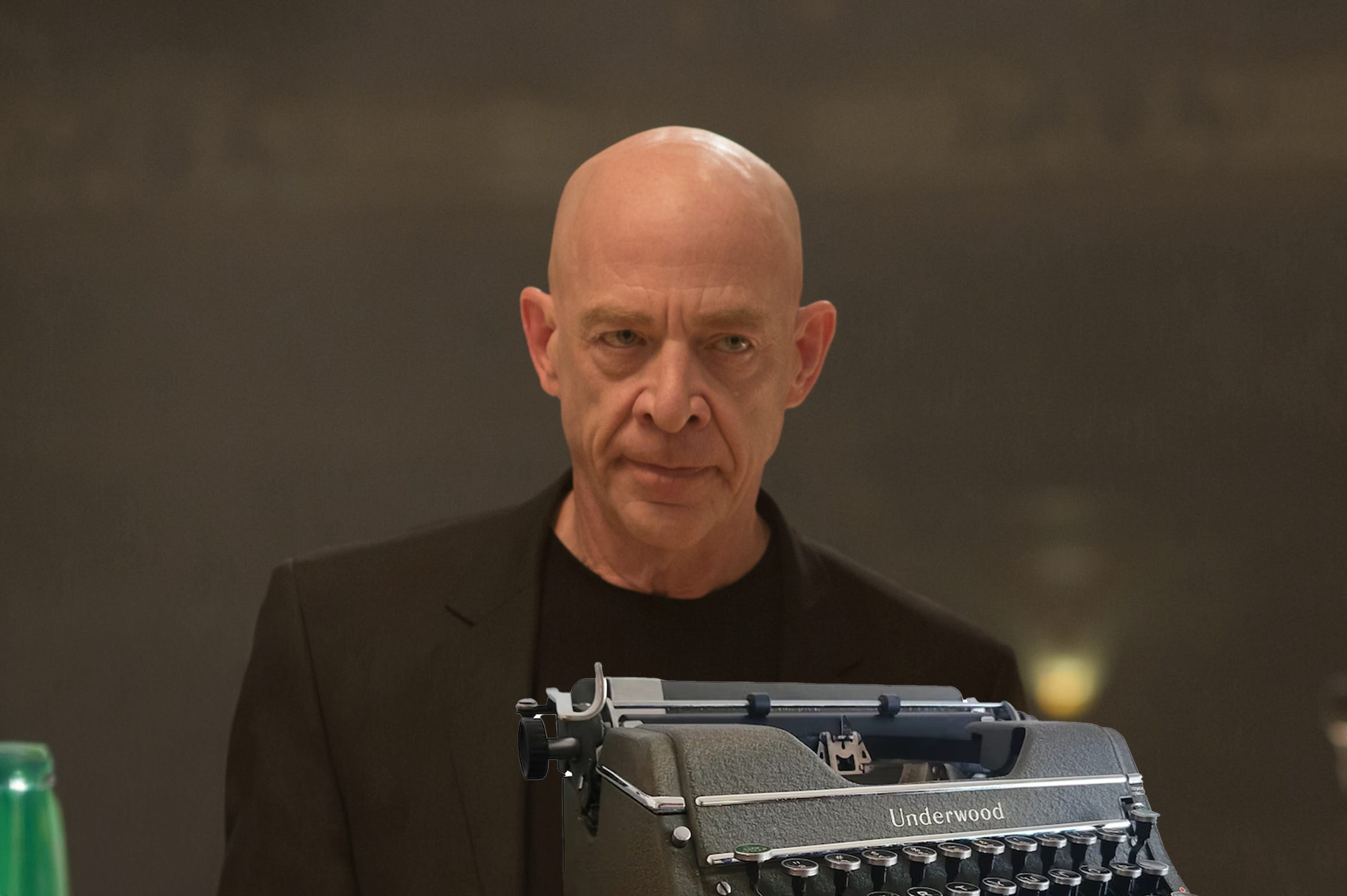
To him, there was a singular “right way” to write a novel, and I needed to get on board. Maybe he thought we were Miles Teller and J.K. Simmons in Whiplash, and what I had wasn’t his tempo. But that with enough blood, sweat, and typewriters thrown at my face, I’d be whipped into a perfect tradesman in a way only he understood.
I was going to conclude this with my overall takeaways on the combined experience, and answer the question: Is getting an MA or any form of Creative Writing education worth it? But this is running long. So we’ll have to tackle that in Writer’s Craft, Wissenschaft 3: Tokyo Schaft.
In the meantime, always open to hearing what you think. Whether you’ve done one or have some thoughts on it. Is it worth it? And what has your experience been?